
Registration for January 2026 Intake is now open
The Sijil Pengajian Islam Programme is designed for students to learn and understand the subjects of Fardu Ain (Individual Religious Obligations), Tafsir (Quranic Exegesis), Hadith (Prophetic Traditions), and Tajwid (Quranic Recitation Rules).
The curriculum is set to be equivalent to the GCE ‘O’ Level IRK (Islamic Religious Knowledge) syllabus, structured specifically to meet the needs of adult students. For effective learning, the programme incorporates both theoretical and practical approaches.
Its objectives are:
To nurture Muslims who understand Islam, practice its teachings, and carry out their obligation of Islah in line with the contemporary context of life in Singapore.
To equip students with a foundational understanding of fardu 'ain and other Islamic sciences.
To enable students to read the Quran fluently with proper tajwid.
1 Year
English
Monday & Wednesday /
Tuesday & Thursday
6.30pm–10.00pm
Wisma Indah
2 Years
English
Sunday 9.00am - 12.30pm
Wisma Indah
Madrasah Alsagoff
Click here for the latest timetable and venue.
The SPI adopts a trimester system where one academic year is divided into three modules. Examinations are held at the end of each module.
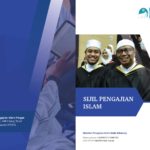
Begin your Islamic learning journey today!
| Registration & Administration Fee | $163.50 (Non-refundable) |
| Tuition Fee | $2014.70 |
Payment Structure
Students are required to pay the tuition fee via Giro. The payment structure is as follows:
| First Payment | $359.70 |
| Monthly Payment | SPI Express: $165.50 (for 10 months) SPI Weekly: $82.75 (for 20 months) |
IPIP also offers bursary for students from families requiring additional financial support. Click here for more information.
*All prices listed are inclusive of GST.
SPI Express
January (Registration period from October to December)
SPI Weekly
First Intake: January (Registration period from October to December)
Second Intake: July (Registration period from May to June)
Click here for further details.
Alternatively, if you have any questions, we welcome you to contact us.
This module explains the general concept and importance of the science of Tauhid. It will then discuss the topics covering the six articles of faith (Rukun Iman), starting from belief in God (Allah) up to belief in Divine Decree (Qada’ and Qadar).
In general, this module will provide an introduction to the science of Aqidah (Islamic Creed) and will touch on related topics such as Experiential Knowledge of God (Ma’rifatullah) and His attributes, matters concerning Prophethood, signs of the Day of Judgment, and others. The teaching of Aqidah in this module adheres to the school of thought of the Ahli Sunnah Wal Jama’ah.
This module provides an initial overview of the definition of Hadith Nabawi (Prophetic Narrations) and the key terminology used in the study of Hadith and its Texts. It will also introduce students to several prominent scholars in the field of Hadith studies. Concurrently, students will study selected hadith from the compilation al-‘Arba’in an-Nawawiyah (Imam Nawawi’s Forty Hadith) and the authentic narrations found in Sahih Imam Bukhari.
This module will expose students to the importance of studying the Sirah Nabawiyyah (Prophetic Biography) for a proper understanding of Islam. It discusses the general condition of the world and, specifically, the state of the Arab Jahiliyyah society before the advent of Prophet Muhammad (peace be upon him) until his passing.
It then delves into the beginning of the Hijrah (migration), the state of the community in Madinah, the post-Hijrah period, and the various battles in the Prophet’s history, all presented in chronological order. The module will also cover the era of the Khulafa’ Rashidin (Rightly Guided Caliphs), and subsequent historical events involving the companions of the Prophet.
Finally, the curriculum will encompass a description of the subsequent caliphates: the Umayyad and Abbasid Dynasties. Key topics will include the formation, golden age, and eventual decline of both the Umayyad and Abbasid rules.
Furthermore, this subject aims to strengthen the students’ connection to the Prophet’s Sirah and encourage them to emulate his noble character.
This module explains the importance of understanding the divine commandments of Allah (s.w.t.) contained within the Quran, focusing specifically on Juz ‘Amma (the final section of the Quran). Every Surah (chapter) will be provided with a detailed explanation and conclusion.
The course will also give a general and brief overview of the discussions related to the science of Usul al-Tafsir (Principles of Exegesis). Additionally, it will analyze the meanings, legal rulings (hukm), stories, and lessons derived from selected Surahs.
This module explains the general concept and foundational principles of the science of Fiqh. It then discusses the legal rulings (hukm) related to the chapter on Ibadat (Acts of Worship). The study will cover laws pertaining to purification (taharah), prayer (solat), charity (zakat), fasting (puasa), and Pilgrimage (Haji).
Broadly, the course will address the daily life situations and circumstances of a Muslim. It will also demonstrate the practical application of these legal rulings (Fiqh). The teaching of Fiqh in this module follows the school of thought of Imam Syafie (Shafi’i school of law).
This module introduces the science of Tajwid of the Quran and its related rulings. These rulings include the rules of Nun Sakinah and Tanwin, Mim Sakinah, the different categories of Idgham (merging), Mad and Qasar (vowel lengthening), letters at the beginning of Surahs, Waqf and Ibtida’ (stopping and starting points), Saktah (short pause), Sujud Tilawah (prostration of recitation), Hamzah (Wasl and Qat’), Rasm Uthmani (orthography), and punctuation marks. The module focuses on the initial-level Tajwid rules required for proper Quranic recitation.
Assessment will be conducted continuously throughout the course. Therefore, students must be consistent in attending the classes in order to be assessed. Students should be prepared for all forms of evaluation set by IPIP. Assessment will include quizzes, assignments, and tests.
Overall, the assessment for each semester is weighted as follows:
1. Modules
| Classroom Participation | 30% | |
| Attendance | 10% | |
| examination | 60% | |
| Passing Requirement | 50% and above |
2. Hafalan Quran & Hadith
| Oral Examination | 100% | |
| Passing Requirement | 65% and above |
Students are required to take both the written (Modules) and memorisation examinations concurrently.
Share this program: